
Industrial design is a vital force that shapes our everyday experiences and interactions with the world around us. At its core, industrial design is about problem-solving – creating products that are not only functional but also aesthetically pleasing, user-friendly, and importantly, marketable. It weaves together creativity, engineering, and user experience to produce innovative solutions that improve the lives of millions people around the world.
Whistle Design Group is a Melbourne based industrial design agency providing advisory consulting and project based industrial design services to clients worldwide. Read on as we delve into the fascinating world of industrial design, exploring its importance, the step-by-step process from ideation to a market-ready product, and common challenges faced by industrial designers along the way.
The Importance of Industrial Design
The importance of industrial design extends well beyond aesthetics – it plays a key role in enhancing usability and accessibility, ensuring that products cater to diverse user needs. Well-designed products can elevate user satisfaction, facilitate brand loyalty, and even influence consumer behaviour. In an age where competition is fierce, exceptional industrial design can be the main differentiator that sets a product apart from its rivals. Whether it’s a precision-engineered power tool, an innovative consumer electronics device, or a cutting-edge industrial system, industrial design can significantly influence the success of a product. Industrial design is essential for several reasons:
- User Experience: Good design ensures that products are intuitive and easy to use.
- Aesthetics: Attractive design can influence purchasing decisions and create brand loyalty.
- Functionality & Performance: Design is not just about looks, it’s about making products that work well.
- Innovation: Industrial designers push the boundaries of what’s possible, bringing new technologies and ideas to market.
Step-by-Step Process from Ideation to Market-Ready Product
The journey from ideation to a market-ready product is exciting! It all begins with a spark of inspiration – a simple idea that begs to come to life.
1. Discovery: Ideation, Research & Planning
This initial phase is all about setting the foundations to develop a successful product. Engaging in creative sessions to explore preliminary ideas & concepts, focusing on identifying problems that need solutions or gaps in the market. Defining the technical requirements of the product and establishing a product development plan that considers timings, budgets and risks.
Once ideas are generated, thorough research is essential.
This involves analysing market trends, understanding customer needs and assessing competitor products. Validation through surveys or focus groups proves invaluable in ensuring that the idea resonates with potential users. The best ideas are then refined into feasible product concepts.
Technical research is crucial to ensuring feasibility, functionality, and innovation. This can involve review of materials, manufacturing processes, ergonomics, sustainability factors and compliance with industry regulations. By integrating insights from technical research, teams can create products that are not only aesthetically compelling but also practical, scalable, and competitive.
- Market Research: Understanding consumer needs, market trends, and competitive products.
- Technical Research: Exploring emerging technologies that could enhance performance, understanding compliance requirements, safety standards and the intellectual property landscape.
- Brainstorming: Generating a wide range of preliminary ideas and concepts that can be taken into the next phases of design.
2. Design
During this stage, selected ideas are fleshed out into a more detailed concept. Industrial Designers respond to the requirements of project and start bringing the product to life through concepts sketches, proof of concept prototypes, 3D CAD design and 3D rendering and visualisation.
- Concept Development: Creating feasible product concepts.
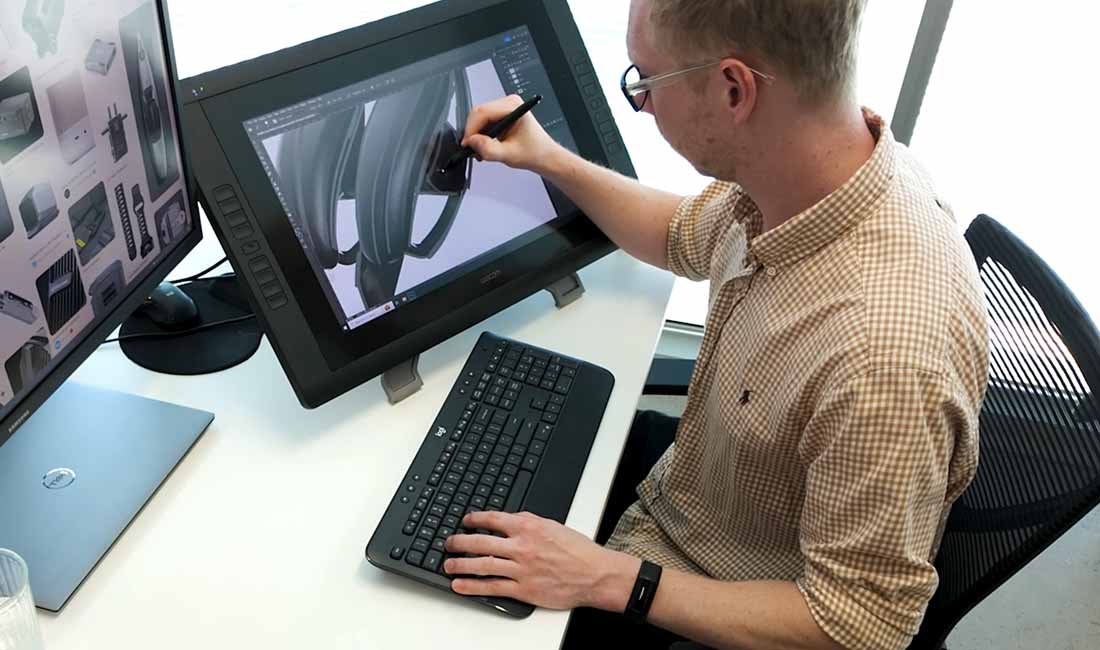
- Sketching and Rendering: Creating visual representations of the product.
- 3D Modelling: Using software to create detailed digital models and photorealistic images
- Prototyping: Building physical models to test form, fit, and function.
3. Testing and Validation
A Design – Build – Test loop is a key part to the industrial design process. Feedback from testing is important for design refinement and optimisation. It involves hands on testing to gather insights from designers, technical teams and actual users to identify any issues or areas for improvement before detail design & full-scale production begins.
- User Testing: Gathering feedback to refine the design.
- Engineering Analysis: Ensuring the product meets safety and performance standards.
- Iterative Design: Making improvements based on testing results.
4. Design for Production Release
The development phase then begins where designers and engineers collaborate to bring the final product to life through design adjustments and functionality enhancements before production starts.
- Detail Design: Finalising all design details and specifications.
- Production Documentation: Including Engineering Drawings, Bill of Materials & Test plans
- Manufacturing Handover: Collaborating with manufacturers to plan production including Design for Manufacture (DFM) reviews
- Production: Bringing the product to life through mass production.
5. Market Launch and Post-Launch
As development progresses, it’s important to craft a marketing strategy that outlines how to position the product in the market effectively – determining target audiences and messaging strategies comes into play here.
Final preparations involve ensuring all systems are ready for launch – this includes final quality checks, setting distribution channels, and preparing marketing materials. Then comes the launch – the culmination of all efforts leads to launching your product into the market where it becomes available for consumers.
- Marketing and Sales: Promoting the product to target audiences.
- Distribution: Ensuring the product reaches consumers.
- Post-Launch Support: Providing customer service and collecting feedback for future improvements.
Common Challenges and How to Overcome Them
The road from concept to completion is not always a smooth one. Professional industrial designers encounter a range of challenges that can hinder the creative process and impact project outcomes. One common challenge is balancing aesthetics with functionality. Designers must create products that not only look appealing but also meet user needs and performance standards. To overcome this, it is essential to involve users early in the design process through methods like user testing and feedback sessions. This collaboration ensures that designs are both visually striking and practical.
Another significant challenge is keeping up with rapidly advancing technology. As new materials and manufacturing techniques emerge, designers must continually educate themselves to leverage these innovations effectively. Staying informed can be achieved through regular professional development, attending workshops, and participating in industry conferences.
Additionally, managing project timelines and costs can be daunting in industrial design due to the iterative nature of product development. To address this issue, establishing clear milestones and communicating openly with team members can enhance efficiency and keep projects on track. By implementing agile methodologies or using project management tools, designers can better navigate deadlines while maintaining creativity.
Acknowledging challenges allows industrial designers to create a more resilient approach to their work, leading to innovative solutions that resonate with users while pushing the boundaries of what is possible in design.
Balancing Aesthetics and Functionality
- Solution: Prioritise user needs and collaborate closely with engineers to ensure that the product is both beautiful and practical.
Meeting Tight Deadlines
- Solution: Use project management tools and methodologies to keep the design process on track and maintain open communication with all stakeholders.
Staying Innovative
- Solution: Encourage a culture of creativity and continuous learning within your design team. Regularly explore new materials, technologies, and design trends.
Managing Costs
- Solution: Optimise the design for manufacturability and work closely with suppliers to find cost-effective solutions without compromising quality.
Industrial design shapes the way we interact with the world around us. From the products we use daily to large-scale innovations that drive industries forward, thoughtful design enhances functionality, improves user experience, and contributes to sustainability. In a world that’s constantly evolving, investing in smart, purposeful design isn’t just important – it’s essential.
As a leading Industrial Design Agency, Whistle Design is committed to helping you navigate the journey from concept to market-ready product. Reach out today to discuss your project and see how we can collaborate to bring your product to life. Call 03 9561 5810 or enquire online now.